Why do I “Walk With Nature”?
The landscapes, experiences and traditions that have shaped my lifelong relationship with the natural world.
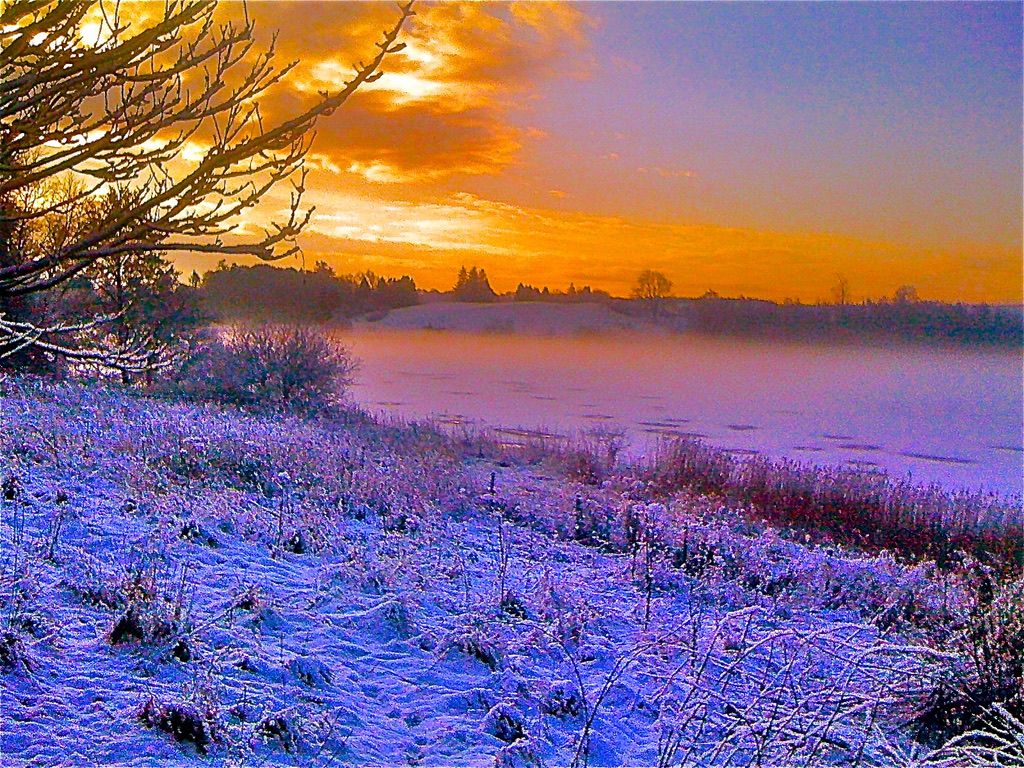
Mountain tarn with heavy hoar frost. Air temperature - 15 degrees C. With wind chill, - 21 degrees C.
Why do I “Walk With Nature”?
There are places in the natural world where I feel more at home than I ever have among the noise and demands of everyday life.
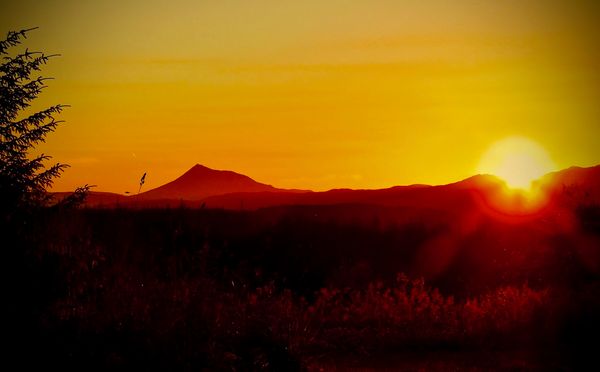
A quiet woodland. A remote Highland glen. The banks of a river winding through an ancient landscape. A stretch of deserted coastline where the only sounds are the wind, the sea and the haunting call of a curlew.
Such places have always drawn me. Not simply because they are beautiful, although beauty is certainly part of it, but because something happens to me when I enter them. The incessant chatter of the everyday mind begins to subside. My senses become more attentive. I notice things that might otherwise pass unseen.
And, perhaps most importantly, I begin to listen.
I have spent much of my life trying to understand that experience.
I was born in Dundee, Scotland, and living in Angus, a part of the country where the countryside, the coast and the Highland mountains are never very far away, meant that from childhood, the natural world held a fascination for me. I wanted to know what lived beneath stones, what birds were calling from the hedgerows, where the rivers began and what lay beyond the distant hills.
That curiosity has never left me.
Indeed, now that I am in my eighth decade of life, I find that my relationship with nature has become rather more intimate, and certainly less concerned with reaching destinations or achieving anything.
I still enjoy a good walk. I love the remoteness of the hills, the solitude of the forests and the openness of the moors. The more remote the place, the greater its attraction.
But these days, I am often content simply to sit.
To watch the changing light upon a hillside. To listen to the conversation of a woodland stream. To observe the behaviour of a bird or animal going about its business, quite indifferent to my presence.
There is a great deal to be learned by sitting quietly and paying attention.
And I suspect that much of what we need to understand about ourselves can be discovered in precisely this way.
A Life of Different Paths
My journey through life has been anything but conventional.
I left school at fifteen and joined the Royal Marines, beginning twelve years of military service. Later, I became a fire officer. I have been a semi-professional musician, playing keyboards in dance, big, dixie, jazz bands. Also Orchestras, large and small. Eventually, my interests in human behaviour, consciousness and the deeper questions of existence led me towards psychotherapy.
For some thirty years, I worked as a Jungian psychotherapist and clinical hypnotherapist.
These different occupations might appear to have little in common. Yet, looking back, I can recognise a thread running through them.
Each, in its own way, involved encountering aspects of life that are not always apparent on the surface.
Military service taught me something about endurance, comradeship and the limitations of personal control. The fire service brought me face to face with human vulnerability and the unpredictability of events.
Psychotherapy opened an altogether different landscape: the inner world of human experience.
I spent many years listening to people’s stories, exploring their dreams, fears, memories and hopes. I became particularly interested in the symbolic language of the unconscious, the enduring power of mythology and the ways in which human beings seek meaning in their lives.
Yet throughout those years, regardless of where I found myself or what responsibilities I carried, the natural world remained a constant presence.
The forests, rivers and mountains were places to which I returned, as a forager, sometimes seeking solitude, sometimes clarity, and sometimes for no particular reason beyond the pleasure of being there.
It was only much later that I began to appreciate how closely my professional interests and my love of nature were connected.
The Outer and Inner Landscape
Carl Gustav Jung devoted much of his work to understanding the relationship between the conscious mind and the unconscious.
He recognised the significance of symbols, dreams, myths and archetypal patterns in human psychological life. He also understood that modern civilisation, for all its extraordinary achievements, had increasingly separated people from aspects of their instinctive and imaginative nature.
This separation has long interested me.
We live in an age when almost everything demands our attention. Our lives are measured, organised, scheduled and increasingly mediated through technology.
Even our encounters with nature can become exercises in achievement: the distance walked, the summit reached, the photographs taken or the number of species identified.
There is nothing inherently wrong with any of these pursuits. I enjoy identifying birds, studying plants and exploring the natural history of a place. I miss not being physically able to dwell in the high mountain tops, but sitting, in front of winter fireside, looking at a map, or a journal entry from times long past, I can recreate those places in my mind, and gain the resulting peace and awe.
But I have come to believe that something important can be lost when we approach the natural world solely as observers, collectors of information or visitors passing through.
There is another way of encountering it.
One that requires us to relinquish, at least temporarily, the need to analyse everything.
To experience a woodland without immediately naming every tree. To hear birdsong before trying to identify its owner. To stand beneath a night sky and allow ourselves to experience wonder without reaching for an explanation.
As a scientist by inclination and training, and a psychotherapist by profession, I value observation, evidence and rational enquiry.
But I also recognise that not every meaningful human experience can be adequately expressed through measurement or intellectual understanding.
There are moments when explanation seems less important than participation.
A sense of belonging, perhaps.
Not as a visitor to nature, but as part of it.
The Old Ways and the Living World
Alongside my interest in psychology and natural history, I have spent many years exploring the spiritual and philosophical traditions through which our ancestors sought to understand their relationship with the world.
Druidry, Celtic mythology, folklore, shamanic traditions and Buddhism have all influenced my thinking and personal practice.
Although their histories and teachings differ considerably, I have found in them recurring invitations to reconsider the place of human beings within the wider natural world.
In particular, Druidry has encouraged me to look beyond the purely material appearance of the landscape and consider its cultural, symbolic and spiritual significance.
An ancient tree may be understood through its biology, ecology and age. It may also occupy a place in local folklore, provide a link with generations long gone, or evoke a deeply personal response in someone resting beneath its branches.
These different ways of understanding need not invalidate one another.
A scientist might explain the mechanisms of a sunrise, while a poet describes its beauty. Both are responding to the same event, although their language and purposes differ.
I have never felt compelled to choose between such perspectives.
My interest in Druidry and the old stories is not an attempt to abandon rational enquiry. Rather, it is an acknowledgement that human experience contains imaginative, symbolic and spiritual dimensions worthy of exploration.
And nowhere do I encounter these dimensions more readily than in the natural world.
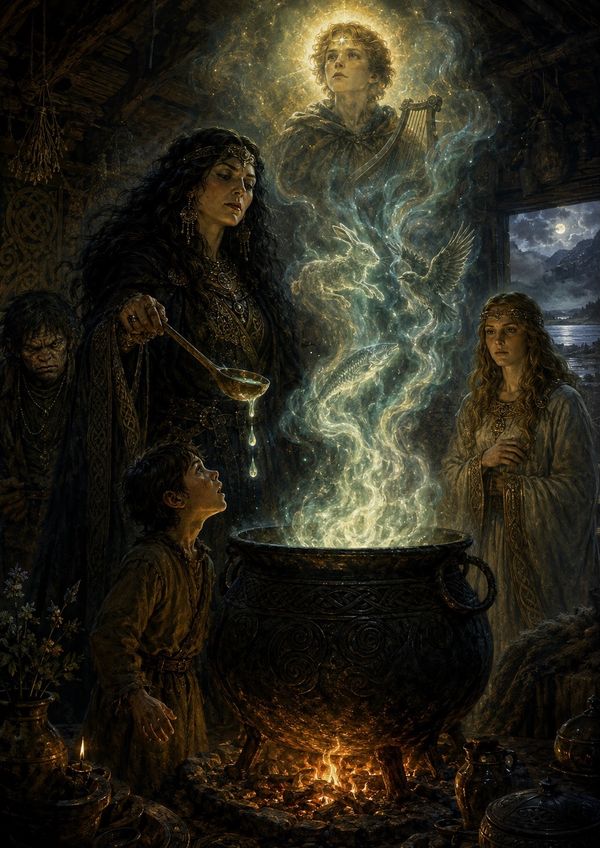
The ancient stories of Cerridwen, Taliesin and the search for Awen, that elusive quality of inspiration associated with Welsh poetic tradition continue to fascinate me.
So, too, do the stories of the seanchaí, the traditional Scottish and Irish storytellers who preserved memories, histories and wisdom through the spoken word.
These are not merely quaint remnants of a vanished past.
They invite us to consider how our ancestors interpreted the landscapes they inhabited, the mysteries they encountered and their own place within the unfolding story of life.
Whether we accept their spiritual interpretations is a matter of individual belief.
Their imaginative richness, however, is undeniable.
The Art of Paying Attention
There is a word I particularly like: nemophilist.
It describes someone who loves forests and woodlands, someone drawn to their atmosphere and quiet seclusion.
I have long recognised myself in that description.
There is something about entering a woodland that changes the quality of my attention.
Perhaps it is the filtered light, the scent of damp earth, the movement of leaves or the occasional glimpse of an animal disappearing among the trees.
Perhaps it is simply the relief of being somewhere that asks nothing of me.
I do not need to be productive in a forest. I need not explain myself, maintain a particular identity or concern myself with the expectations of others.
I can simply be.
And in that state of being, I often find myself noticing more.
The intricate structure of a fallen branch. Fungi growing from decaying timber. The delicate architecture of moss. The sudden silence of birds that announces the presence of a predator.
These small observations can be every bit as rewarding as standing before a magnificent mountain panorama.
Indeed, I sometimes think the quieter experiences remain with us the longest.
There is also a deeper lesson to be found in observing the natural world.
Everything is changing.
The tree that appears motionless is growing, responding to the seasons, exchanging energy and nutrients with its surroundings. The river that seems familiar is never quite the same river twice.
Life and death, creation and decay, struggle and renewal are constantly unfolding around us.
Nature does not conceal these processes.
It is we who sometimes prefer not to look too closely.
As I grow older, I find myself increasingly aware of the value of these observations. They encourage a more accepting relationship with change, including the changes taking place within my own life.
There is consolation in recognising that we belong to something infinitely older and greater than ourselves. Something “other”.
Walking, Ageing and the Passage of Time
Age changes one’s relationship with the landscape.
There was a time when I could walk for hours across difficult ground, climb steep hills with very heavy loads on my back, and regard physical exhaustion as little more than an inconvenience.
I still value the independence and pleasure that walking brings, although I now approach it with a rather different understanding of my limitations.
I have experienced enough of life to know that health, strength and certainty cannot be taken for granted.
Nor can time.
The mountains are no less beautiful because I may no longer climb them. A woodland path does not become less rewarding because I walk it more slowly.
Quite the opposite.
Slowing down has revealed things I once hurried past.
I notice more of the smaller lives surrounding me. I am increasingly interested in the relationships between plants, fungi, birds, insects, weather and the earth beneath my feet.
And I have discovered that a short walk undertaken attentively may offer as much as a long and demanding expedition.
There are parallels here with the psychological process Jung called individuation — the gradual development of a more integrated relationship with the different aspects of ourselves.
In later life, that journey often involves reassessing the identities, ambitions and assumptions that once seemed so important. Also those times where we took a wrong path, or missed the signpost to an important path.
I have spent a considerable part of my life helping others explore such questions.
Now, in retirement, I find myself continuing that exploration in a quieter, more personal way.
The natural world remains one of my most valued companions in the process.
Why I Write
Walking With Nature has grown from these lifelong interests and experiences.
It is my attempt to bring together the different paths I have followed and share something of what I have discovered along the way.
I write about the Scottish landscape because it is the landscape I know and love.
Its mountains, glens, forests, rivers, coastlines and wildlife have shaped my imagination and provided a constant source of interest, healing and inspiration.
But my writing is not intended to be confined to Scotland.
I am equally fascinated by the natural history, folklore, mythology and spiritual traditions of other places, particularly those that reveal something about humanity’s longstanding relationship with the living world.
I enjoy exploring the connections between these subjects.
How might an ancient story illuminate a modern psychological experience?
What can traditional folklore tell us about the ways people once understood their environment?
Why does an encounter with a wild animal, an ancient woodland or a remote landscape sometimes produce a sense of awe that is difficult to explain?
And what might that experience reveal about our own inner lives?
These are some of the questions I hope to explore here.
I also intend to share stories.
Stories drawn from mythology and folklore, sometimes retold in my own words, alongside personal reflections, observations from my walks and essays on the natural world.
There will be occasions when I examine a subject through the lens of Jungian psychology. At other times, I may approach it through natural history, philosophy or the old spiritual traditions.
And sometimes I shall simply describe a place, an encounter or a moment that has remained with me.
I do not claim to possess definitive answers to the questions that interest me.
After more than seven decades of living, studying, working and wandering, I am perhaps more conscious than ever of how much remains unknown.
But I remain curious.
That, I think, is important.
An Invitation to Walk With Me
I have no wish for this publication to become a platform from which I deliver pronouncements about how others ought to live, think or believe.
I would much rather it became a place of shared curiosity.
Some readers may be interested primarily in nature and wildlife. Others may come for the folklore, mythology, psychology or spiritual reflections.
Some may simply enjoy a story.
All are welcome.
You need not share my beliefs or interpretations to accompany me on these journeys. Indeed, I welcome the company of those whose understanding of the world differs from my own.
A thoughtful question or a different perspective can be as valuable as agreement.
Above all, I hope my writing encourages readers to rediscover something of their own relationship with the natural world.
Not necessarily by travelling to remote mountains or undertaking ambitious expeditions.
A garden, a local park, a woodland path or a quiet stretch of riverbank may offer more than enough.
It begins, I think, with attention.
With allowing ourselves sufficient time to notice what is happening around us.
To listen.
To become curious.
And occasionally to experience that wonderful, almost childlike sense of astonishment at the simple fact that we inhabit such an extraordinary world.
I have spent a lifetime walking through it, and I still find new reasons to be amazed.
Perhaps that is why I walk with nature.
Not to escape life, but to experience it more fully.
And, in some small way, to understand my place within it.
I started this article with a question. Why do I Walk with Nature?
Using the old Scottish vernacular, it is because,
It gies ma heid peace.
Welcome to Walking With Nature. I hope you will enjoy the journey.
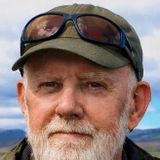
David de Gernier. Angus, Scotland