The Irish Triad
Less can be more

The Irish Triads are short, three-part sayings from medieval Irish learned tradition.
The best-known collection is Trecheng Breth Féne, usually translated as something like “A Triadic Arrangement of the Sayings/Judgements of the Irish.”
Their intention was mainly mnemonic and didactic: they compress legal, social, moral, topographical, and proverbial knowledge into threes, making it easier to remember, recite, compare, and teach. Such numbered sayings were common in Irish law and literature, and that these schematic arrangements were “a great aid to memory.”
Triads are still an important part in the current training for the Bardic grade of Druidry.
Renewal through watching the seasons:
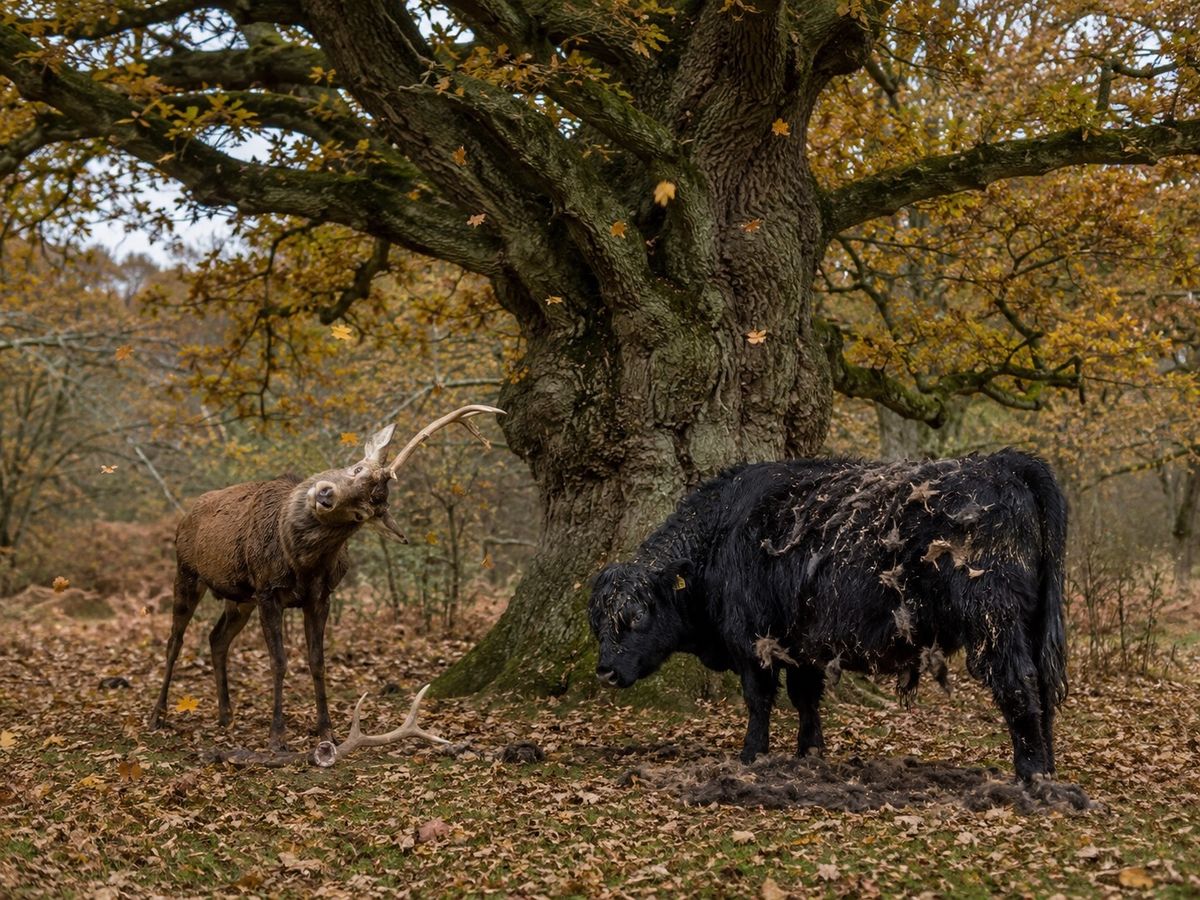
“Three live ones that put away dead things: a deer shedding its horn, a wood shedding its leaves, cattle shedding their coat.”
Meaning:
This triad observes nature as a pattern of renewal. The deer casts its antlers, the wood drops its leaves, and cattle shed their old coat. The moral is that life renews itself by letting go of what is no longer needed. Spending time in nature teaches this quietly: decay is not only loss; it is preparation for return, growth, and new strength.

The wild places as places apart
“The three desert places of Ireland: Fid Mór — Great Wood — in Coolney, Fid Déicsen — Spy-wood — in Tuirtri, the Wood of Moher in Connaught.”
Meaning:
Here “desert” does not mean sand, but a remote, wild, sparsely inhabited place. The moral is that nature includes places outside ordinary human busyness: woods, margins, and lonely ground. Spending time in such places can bring humility, silence, alertness, and a sense that the human world is not the whole world.

Three sorrows that are better than joy: a herd heavy from feeding on mast, a ripe field, and a wood heavy under mast.
The moral is that some “sorrows” are really signs of abundance.
A herd grown heavy from feeding, a field ripe for harvest, and a wood weighed down with mast — acorns, nuts, seeds — all create worry and labour. The farmer must guard, gather, cut, store, and manage them. Yet these are good burdens, because they mean fertility, food, wealth, and survival.
So the triad teaches that not every weight in life is misfortune. Some burdens are the visible proof of blessing: the anxiety of harvest is better than the ease of emptiness.