Seeking inspiration.
The search for awe, awen and honing my craft.
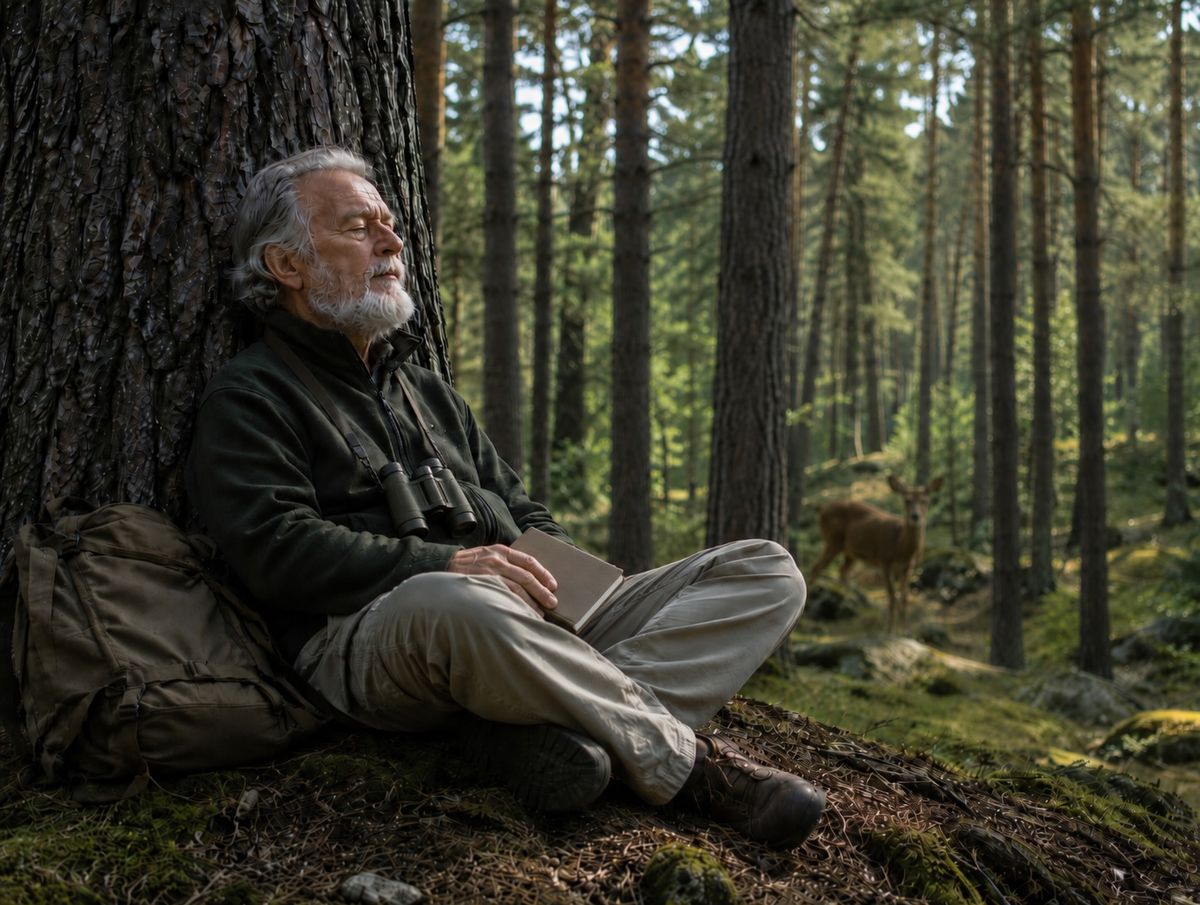
A nature writer does not begin by mastering a landscape. The better beginning is humbler: to return, to notice, to listen, and to allow the place to work upon the mind before the mind tries to make literature of it.
I go to a place I can return to often: somewhere near enough to become known. My aim is to find a source of inspiration in nature, but I do not expect it to reveal itself at once.
I choose a place I can visit again and again: a strip of shore, a river path, a city park, a stand of birch beyond a housing estate, a nature reserve, a woodland glade. I go when I am not in the mood. I go when the light is poor and the paths are wet. I go in winter, when the trees show their bones. I go in May, when everything seems to speak at once. I go in all weathers, through all seasons, and at different times of day and night.
The first visit gives me an impression; the tenth begins a relationship. After a while, the place stops being scenery and starts becoming a presence: fully sensed, fully experienced. I am no longer merely a visitor. I am someone learning how to belong.
Before I write, photograph, record, or take anything away, I inwardly ask permission from the spirit of the place: May I? Can I? Should I? If the answer is no, I go elsewhere, or return at another time. Not all places welcome us at all times. I do not hurry to make notes. I sit or stand still, and receive.
I remain long enough for the place to forget I am there, and for the birds to return to their business. The wren, the blackbird and the squirrel cease their alarm calls. A blackbird goes back to foraging in the leaves. The wind combs the grass one way, then another. The world, which seemed loud when I arrived, becomes full of small sounds.
This is where inspiration begins: not in the wish to say something, write something, or record something, but in the willingness to listen.
I carry a notebook, but I try not to hurry towards it. I am not there to capture the scene. I am there to be changed by it.
What do I sense? What do I smell or taste? What do I hear or see? What has altered in the air since I arrived?
When I feel ready, and accepted, I may write, draw, record, or film. I may notice the color of lichen on an old dry-stone wall; the smell of wet leaves, ash bark, or wild garlic; the musky trace of a fox; the death-squeal of a rabbit caught by a stoat. Focused attention is a form of reverence.
I may be hoping for beauty, mystery, wonder, connection, awe. But those hopes are often too broad to hold the living thing. I write instead of the heron’s stillness, the fox’s white brush tip, the sudden blue flash of a jay’s wing. Without faithfulness to detail, the larger meaning is lost.
I learn to identify animals, flowers, fungi and the places where I am likely to find them. But learning names is only the first step.
To identify hawthorn is useful. So is knowing that hawthorn flowers before its leaves fully open; that its blossom can carry sweetness and a faint edge of death; that it gathers linnets and bees to its boughs; that it marks old boundaries and survives hard cutting. This is deeper knowledge. Deeper still is to know its medicinal uses, its place in hedging and stock fencing, its presence in folklore, taboo and May-time custom. To know a thing fully is to meet it across time. The map is not the territory.
I collect field guides, old maps, parish histories, folklore, geology and weather signs. I learn from botanists, birders, farmers, foresters, fishermen, gardeners, walkers and children. The living world is the best teacher. A stream is also rain, run-off from fields, stone, moss, trout, sheep-track, childhood, industry, flood and song.
I try not to become clever at the expense of wonder. Facts should deepen attention, not replace it. The Latin name of a plant is a key, sometimes descriptive and often helpful, but it is not the house.
There will come, in time, if I am patient, a spark of awe: the germ of an idea.
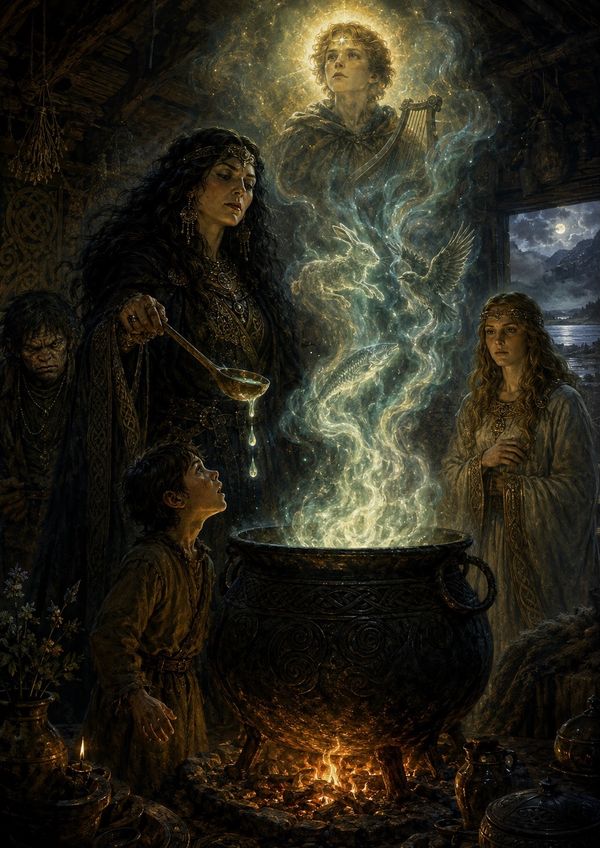
It may be small: a dead moth on a windowsill; the first curlew or chiffchaff of the year; a deer watching me from the edge of plantation darkness; a vixen, heavy with milk, crossing my path with a rabbit in her mouth for her cubs; a seed or a tick caught in my cuff; the cracked and gnawed shell of an acorn. Something will strike the mind with more force than seems reasonable. I do not dismiss it. It may be one of the drops from the cauldron of inspiration: Awen.
Follow the thought, I tell myself. Why has it found me? Not only what it is, but what it touches in me. A bird may lead me to its migration, to far-off lands, to my late father’s silence, to death, to hard roads travelled and wrong roads taken. A tree may lead me towards grief, lost love, fire, shelter, endurance, rootedness. A stream may recall times past, or its eddies and floating flotsam may remind me of grasping, writing, erasing and rewriting words many times a day.
This is what the chase is about, and every writer must accept it while learning the craft. The subject I choose is rarely the subject I end up with.
I begin with a fox and find myself writing about secrecy and sleekitness. I begin with a river and find myself writing about return. I begin with a rowan tree and find myself writing about household protections against evil. I let the work change shape.
Writing is not only outward observation; it is inward fermentation. It may take a year and a day, bubbling away in the cauldron of the psyche, before the potion is ready to initiate transformation and invest the work with Awen.
The danger is to write only about myself, using nature as decoration. The opposite danger is to remove myself entirely and produce a spreadsheet, a twitcher’s year list, or a lifetime tally of sightings. The living, breathing essay stands between the two. It lets the world remain itself, while admitting that the writer is part of the encounter, if only for a short, magical, awe-filled moment.
I say ‘I’ sparingly, but honestly. I let the self appear as a walker, a visitor glimpsed in mist: present, but not dominating the scene or stealing the light.
Inspiration is only the beginning. The work must be processed, allowed to cool, before I can see its true shape. Later, when I return with a sharper eye, I can cut what is inflated, vague, or false. I can remove the sentences that tell rather than show, that perform wonder instead of earning it. I replace vagueness with touch, smell, sound, weather and movement.
I ask of every word: is this alive, or is it only moribund drivel?
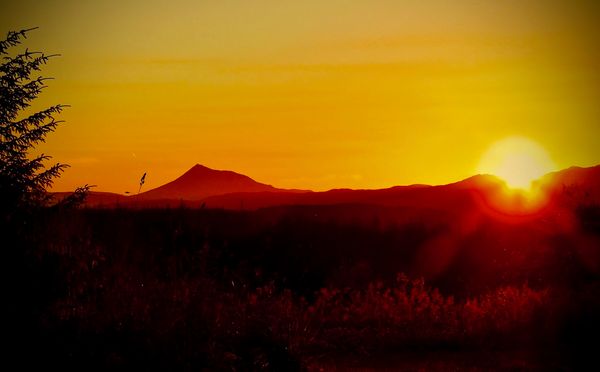
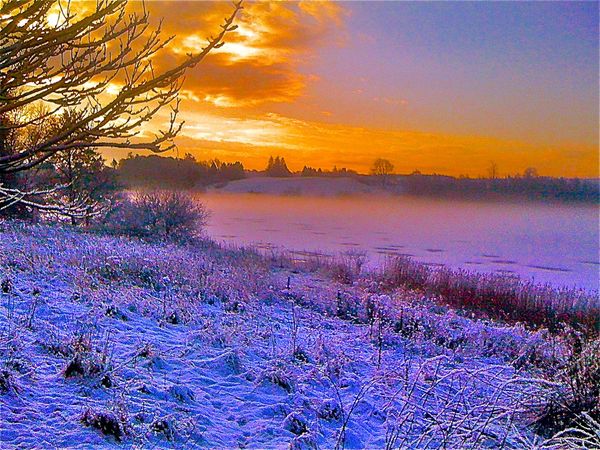
The source I seek is not somewhere beyond the world. It is in the meeting between outer and inner life. It is found in threshold places and threshold hours: beyond the hedge, at the crossroads, at dusk or dawn. It is where the cry of a bird troubles an old memory; where the sight of a spider’s web, pearled with morning dew or hoar frost, alters the pace of thought; the sudden halo of sunlight in the tree tops, or where the changing season teaches me something I could not have learned by thinking alone.
To find inspiration, I do not wait for it to appear. I go out. I return. I attend. I learn silence. I let the place hand me the moment, and have its way with me.
As an aspiring writer, I am not trying to be a master standing over the landscape, but a listener in the presence of a teacher. Then the written page becomes more than a display case for my impressions. It becomes a place where the encounter is carried back and given voice.